
916-780-1000

Why Dental Implants Protect Your Jawbone After Tooth Loss

Losing a tooth affects far more than the appearance of your smile. Beneath the surface of your gums, an invisible process begins immediately after a tooth is lost. The human body relies on constant mechanical stimulation to keep tissue healthy, and your jawbone is no exception. Without the natural stimulation provided by tooth roots, bone tissue starts to deteriorate over time. Understanding how to stop this breakdown is essential for maintaining long-term oral health and facial structure.
At Pure Dentistry Rocklin, patient wellness rests on providing clear, evidence-based guidance regarding tooth replacement options. When teeth go missing, modern restorative techniques can help preserve natural anatomy. Choosing dental implants in Rocklin offers a permanent approach to restoring both function and structural stability. Proper dental care involves addressing missing teeth before bone recession creates secondary complications across your entire mouth. Selecting a reliable dental treatment early protects your jaw structure and preserves surrounding health.
The Hidden Science of Bone Loss After Tooth Loss
To understand why bone vanishes after a tooth falls out, it helps to look at how teeth interact with the jaw. Your jawbone remains dense and robust because every chew and bite sends forces down through the crown and root. This force signals the body to send nutrients and build new bone cells, a process called remodeling.
When a root disappears, the bone in that vacant site receives zero physical stimulation. The body interprets this lack of activity as a sign that bone tissue is no longer needed in that area. Consequently, the bone begins to shrink, a physiological process known as bone resorption.
- Rapid Initial Loss: Up to 25 percent of the bone width at the extraction site can disappear within the first year following tooth loss.
- Continuous Resorption: Bone erosion does not stop after the first year; it gradually continues over time, weakening adjacent structures.
- Altered Facial Structure: Severe bone resorption eventually leads to collapse in the lower third of the face, causing premature aging and sagging skin.
- Shifting Teeth: Nearby natural teeth lose their lateral support, causing them to tilt, drift, or become loose over time.
Consistent dental care prevents these complications by evaluating bone height promptly after tooth extraction or loss. Incorporating an appropriate dental treatment protects your mouth from compounding structural issues.
How Implants Act as Artificial Roots
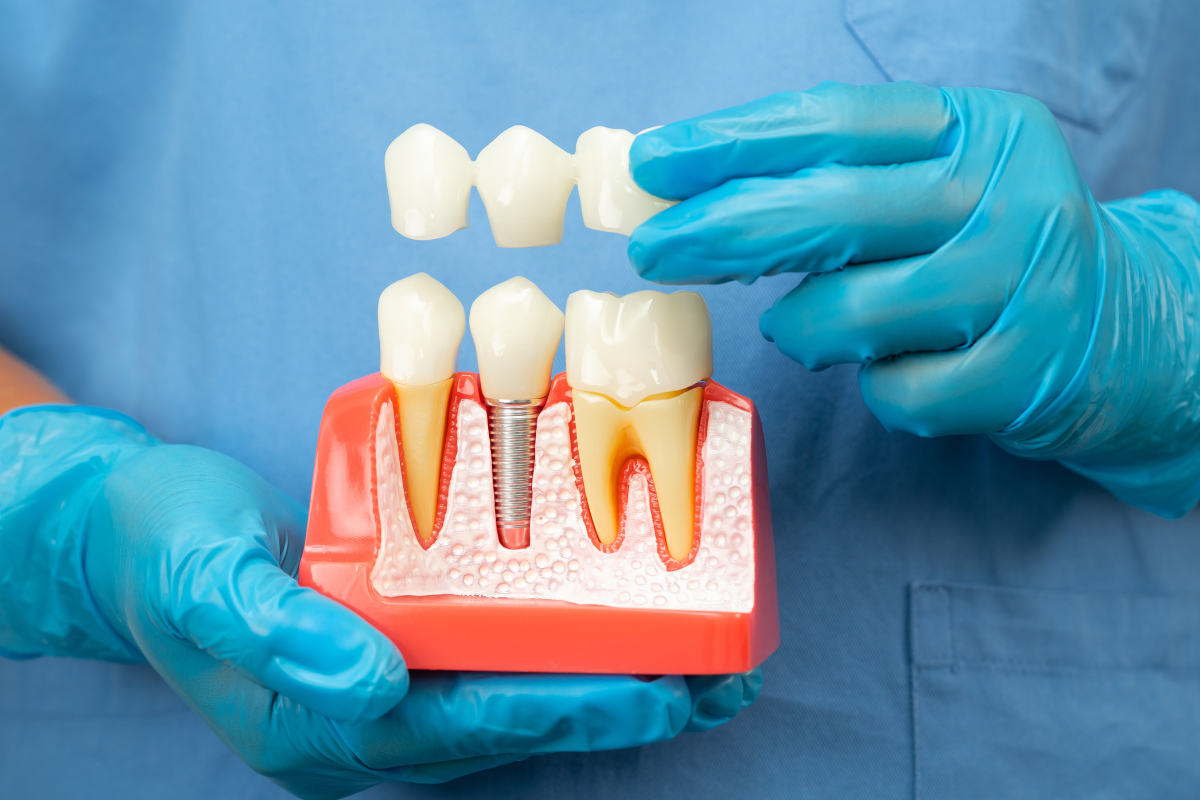
Traditional restorations like removable dentures or fixed bridges sit on top of the gums. While they fill visible gaps, they do not extend into the jawbone itself. Because they lack root-level anchors, traditional bridges and dentures cannot stop bone loss.
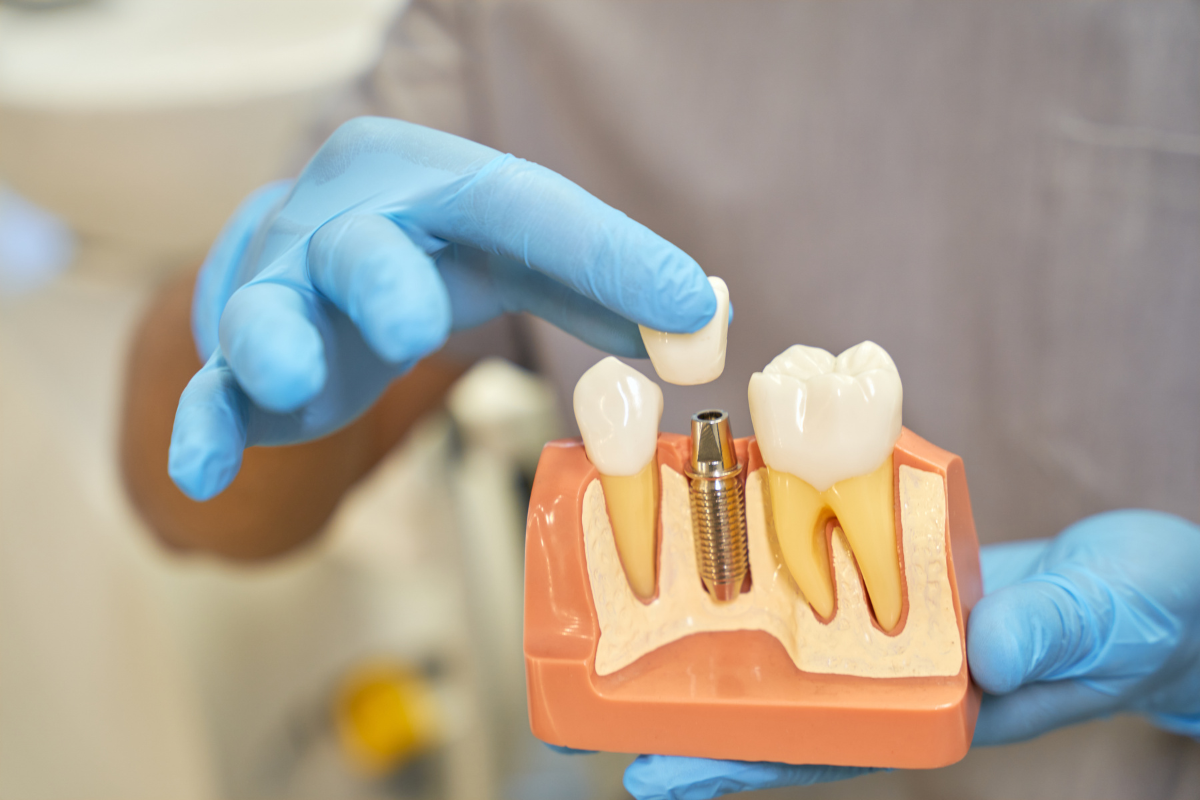
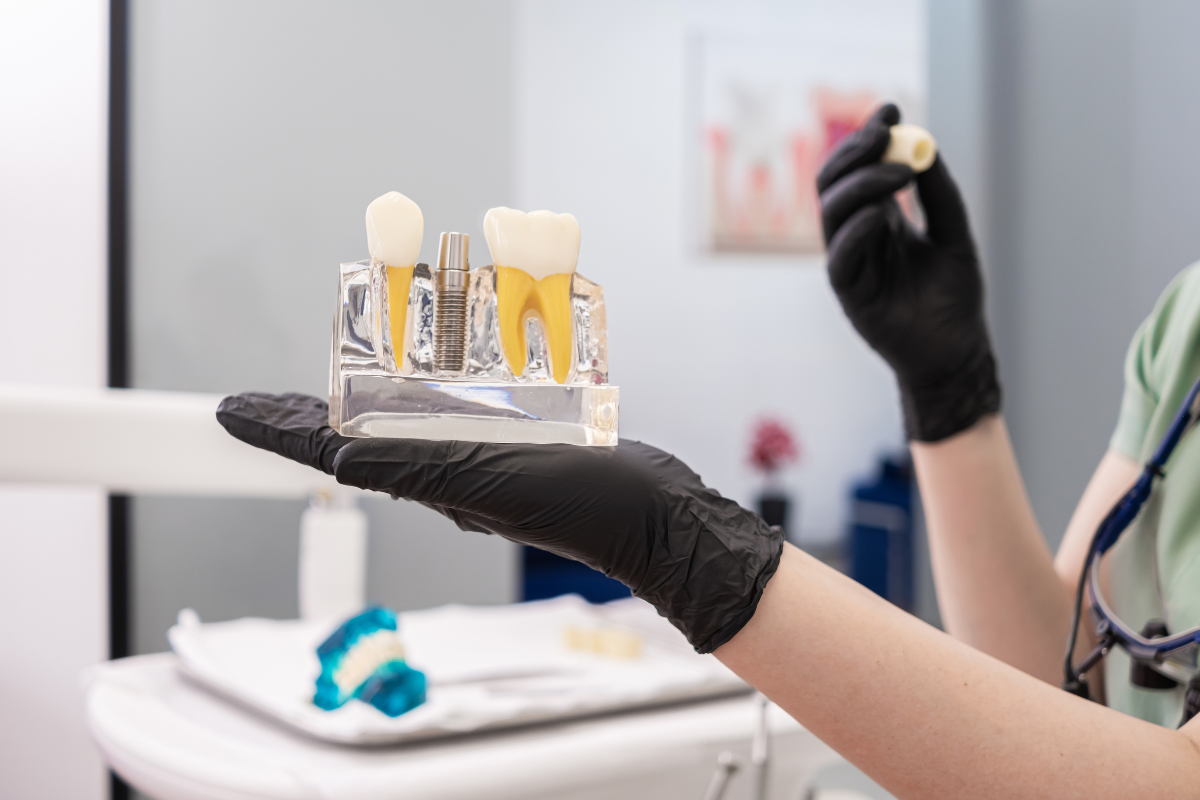
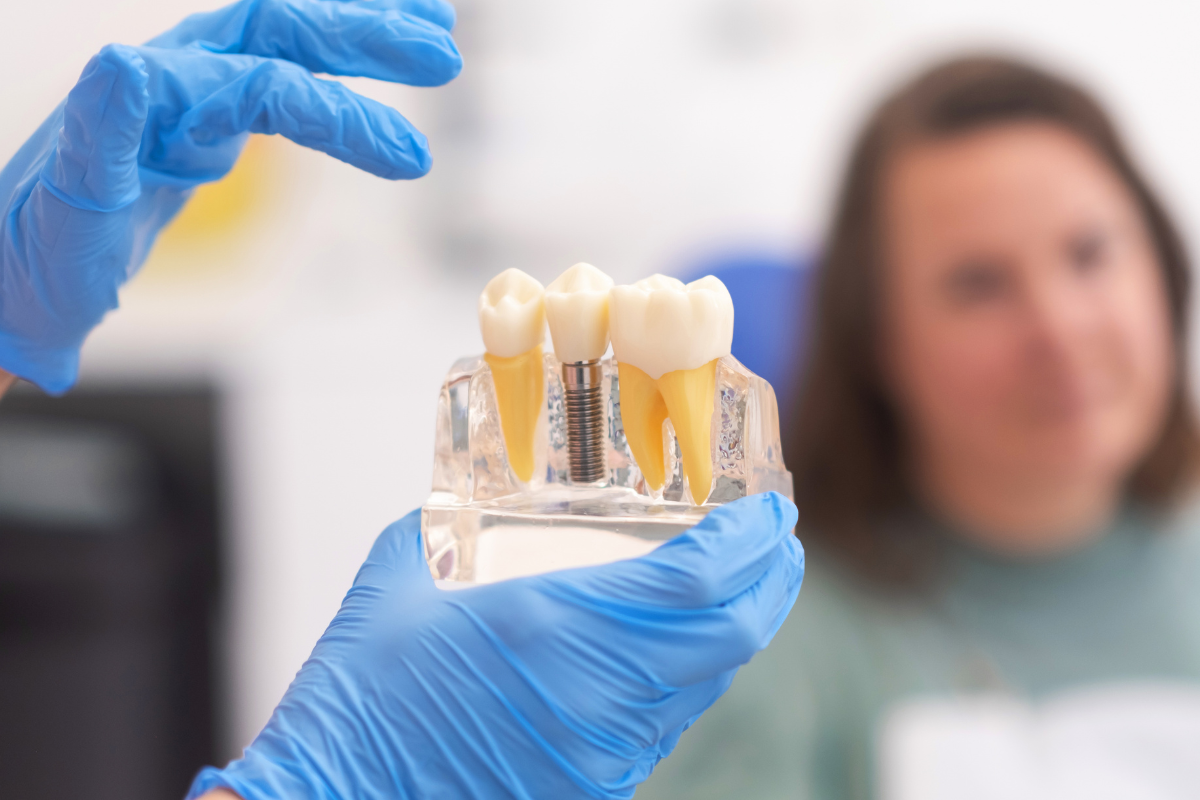
An implant post made of biocompatible titanium fixes this issue directly. Inserted into the jawbone, the post acts as a replacement tooth root. Over a few months, a biological process called osseointegration occurs, where natural bone fuses directly with the titanium surface. Dr. Slate utilizes advanced imaging to evaluate bone density before placing these permanent posts, ensuring an ideal foundation.
- Direct Stimulation: Every time you chew, the implant transfers natural force directly into the jawbone, signaling it to remain strong and dense.
- Preventing Collapse: By actively stimulating bone cells, dental implants prevent the progressive bone shrinkage that follows missing teeth.
- Preserving Gum Aesthetics: Healthy bone support keeps the gumline full, maintaining natural contours around adjacent teeth.
By integrating this approach into routine dental care, patients maintain complete oral stability. Receiving the right dental treatment ensures your bone stays active and vibrant for decades.
Protecting Neighboring Teeth and Overall Mouth Health
Tooth loss creates a chain reaction throughout the oral cavity. When a space remains empty, neighboring teeth lose their natural boundaries. They begin leaning into the vacant gap, changing how your upper and lower teeth meet when you bite.
Uneven biting forces can lead to joint strain, cracked enamel, and difficult-to-clean spaces where bacteria thrive. Placing titanium implants stops adjacent teeth from drifting off course. At Pure Dentistry Rocklin, patient evaluations prioritize long-term bite harmony and full alignment. Do you need dental implants from our Rocklin dental office? Schedule an appointment today.
| Tooth Replacement Method | Stimulates Jawbone? | Protects Adjacent Teeth? | Permanent Solution? |
| Dental Implants | Yes (via root stimulation) | Yes (no grinding required) | Yes (fuses to bone) |
| Traditional Bridges | No (sits above gumline) | No (requires shaving neighbors) | No (needs replacement) |
| Removable Dentures | No (accelerates friction loss) | No (anchors on adjacent teeth) | No (requires frequent relining) |
Choosing an effective dental care program addresses both the immediate gap and long-term alignment. Seeking appropriate dental treatment helps preserve healthy enamel on adjacent natural teeth without filing them down.
Preserving Long-Term Wellness at Pure Dentistry Rocklin
Protecting your jawbone is about preserving your quality of life, clear speech, and comfortable chewing. Delaying replacement allows bone resorption to advance, sometimes requiring bone grafting before an implant can be safely placed. Addressing tooth loss early keeps procedures simpler and helps preserve natural bone structure.
Dr. Slate works closely with every patient to create a clear plan that addresses individual anatomical needs. By combining precise diagnostic tools with patient-focused care, restoring missing teeth becomes a smooth process. Regular dental care ensures that your restorations remain in peak condition over time. If you have been living with a gap in your smile, visit our dental office to discover how modern restorations rebuild complete health from the root up. Receiving timely dental treatment protects your underlying bone before permanent structural changes occur.
Final Thoughts
Missing teeth affect far more than outward appearance; they quietly compromise your jawbone health every single day. Restoring missing roots with dental posts halts bone degradation, protects surrounding teeth, and maintains natural facial structure. Pure Dentistry Rocklin remains dedicated to helping patients regain full oral strength through proven restorative techniques. Take control of your oral health today—contact our team to book an appointment for dental implants in Rocklin and discover personalized restorative care for residents in Rocklin and nearby communities.
Frequently Asked Questions (FAQ’S)
Can dental implants prevent future bone loss in the jaw?
Yes, they act as artificial roots that transfer chewing forces directly into the jawbone. This physical pressure signals the body to maintain bone density, halting the natural resorption process that occurs when teeth are missing.
What happens if I delay getting an implant after losing a tooth?
Delaying restoration allows the jawbone at the vacant site to shrink gradually over time. Over months and years, this bone loss can cause neighboring teeth to shift and may require bone grafting procedures before a post can be safely placed.
How do implants differ from traditional dental bridges regarding bone health?
Traditional bridges sit above the gumline and anchor onto neighboring teeth, leaving the underlying bone unstimulated. Implants anchor directly into the bone, stimulating tissue and protecting natural surrounding teeth from being ground down.
Is bone density required before receiving an implant post?
Adequate bone volume is necessary to support and anchor the post securely. If significant bone loss has already occurred, bone grafting techniques can rebuild the area to create a stable foundation for the replacement root.
How long do bone-anchored restorations typically last?
When maintained with consistent brushing, flossing, and professional checkups, the titanium post integrated into the jawbone can last a lifetime. The attached crown may undergo normal wear over many years but is easily maintained or replaced.